Continuous measurement of HCl in stratosphere
6.28.2006
The continuous measurement of HCl in the stratosphere shows the rapid recovery of this major chlorine reservoir after polar ozone loss, and continues the long-term measurements from UARS HALOE.
When CFC's are photolyzed, the chlorine mostly goes to form HCl. Thus monitoring HCl tells us about ozone loss processes and the recovery of the ozone layer. The top slide shows how HCl is converted into ozone destroying ClO (also measured by MLS) during the polar winter. In the Antarctic ozone hole, once ozone is gone, the free chlorine reacts with methane rapidly forming HC. In the northern winter, not all the ozone is destroyed so the recovery to HCl is not as rapid, both HCll and ClONO2 form.
CFCs were banned in the 1980's so the chlorine input to the stratosphere has decreased. The lower graph shows the slow decrease in HCl with time as chlorine is leaving the stratosphere.
First continuous view of chlorine partitioning through polar winter
- MLS simultaneously measures reservoir (HCl) and active (ClO) chlorine
Decrease in upper atmospheric HCl
- MLS global data are consistent with rate at which anthropogenic chlorine is expected to be cleansed from stratosphere
-
Pre-CFC values of HCl are <2 ppbv
- Stratospheric 'cleansing' will take ~50 years
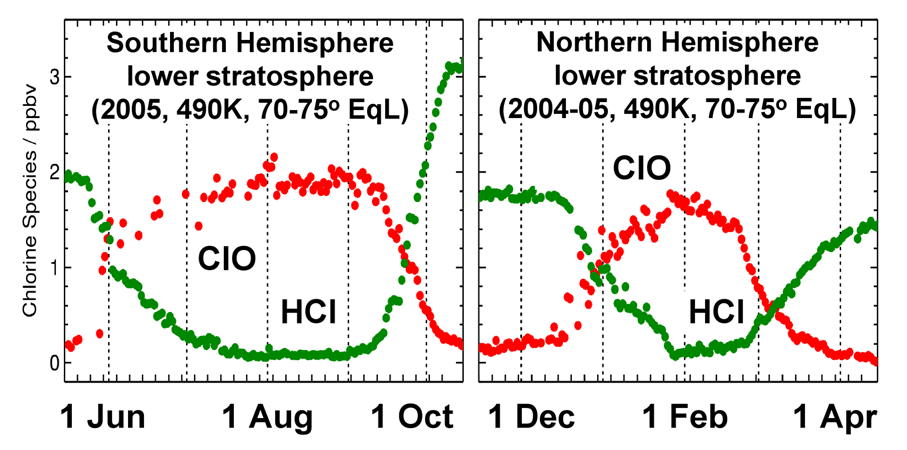 In the polar vortex regions HCl is
converted to ClO which destroys ozone
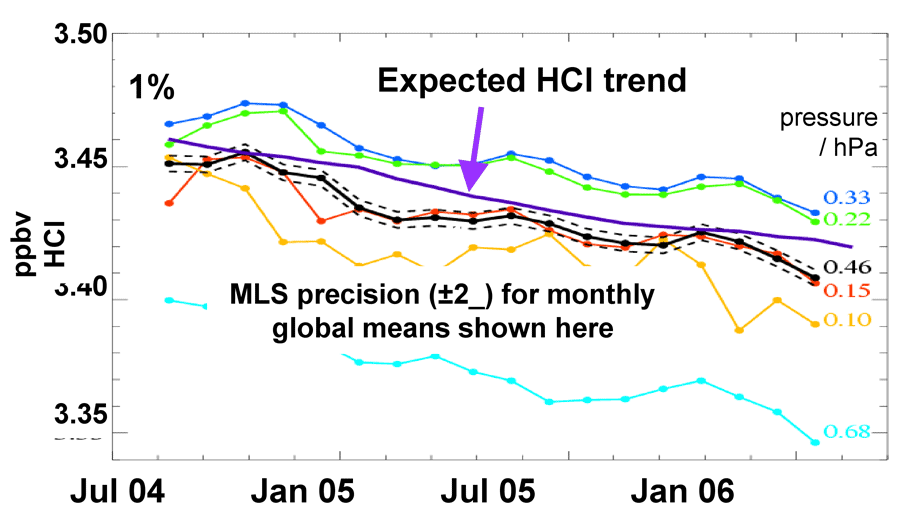 HCl is slowly decreasing due to ban on CFC's
+ Aura's Top 10 Feature